Human Memory vs AI Memory: Why We Forget (And Machines Don't)
The Witness Who Lied Without Knowing It
In 1992, a cargo plane crashed into an apartment building in Amsterdam, killing 43 people. It was one of the worst aviation disasters in Dutch history. Ten months later, researchers asked 193 people a simple question: "Did you see the television footage of the plane hitting the building?" A majority said yes. They described the angle of impact. The speed of the plane. The fireball.
There was no footage. None had ever been broadcast. Every witness who "remembered" the video had constructed a memory from nothing — a vivid, confident, detailed false recollection.
This experiment, conducted by cognitive psychologist Hans Crombag, reveals something that should unsettle anyone who trusts their own mind: human memory is not a recording. It is a story we tell ourselves, rewritten every time we tell it.

Memory Is Reconstruction, Not Playback
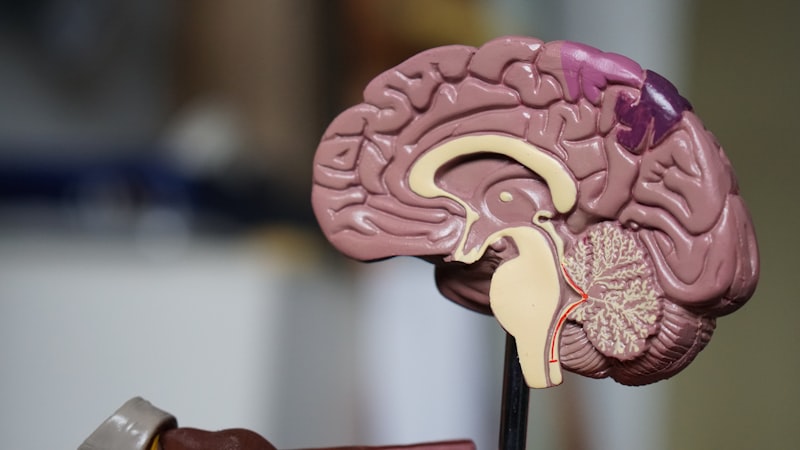
The brain does not store memories the way a hard drive stores files. When you "remember" something, you are not retrieving a fixed record — you are actively reconstructing an event from fragments scattered across multiple brain regions. The hippocampus stitches together emotional signals from the amygdala, sensory details from the cortex, and contextual cues from the prefrontal cortex into a coherent narrative.
This reconstruction process is creative by design. It fills gaps, corrects inconsistencies, and updates older memories with newer information. That is an extraordinary cognitive achievement — but it means every act of remembering slightly changes the memory itself.
Neuroscientist Donna Bridge at Northwestern University demonstrated this in 2014 using MRI imaging. Participants who revisited memories in new contexts showed measurable changes in the neural pattern representing those memories. Remembering, in other words, is also a form of forgetting — and rewriting.
The Forgetting Curve and the Misinformation Effect
Hermann Ebbinghaus, a German psychologist working in the 1880s, was the first to quantify memory decay systematically. His forgetting curve — derived from memorizing thousands of nonsense syllables — remains one of the most replicated findings in cognitive science:
- Within 20 minutes of learning new information, we forget approximately 42% of it.
- After one hour, roughly 56% is gone.
- After one day, about 74% has decayed.
- After a week, only around 23% of the original material remains reliably accessible.
Ebbinghaus also discovered the solution: spaced repetition. Reviewing information at strategically increasing intervals dramatically flattens the forgetting curve — a finding that underlies every modern learning app, from Duolingo to Anki.
But forgetting is only half the problem. Elizabeth Loftus, a cognitive psychologist at UC Irvine, spent four decades demonstrating something more disturbing: human memory is not just leaky, it is suggestible. In her landmark 1974 study, participants watched footage of a car accident, then answered questions. Those asked "How fast were the cars going when they smashed into each other?" gave significantly higher speed estimates than those asked about cars that "hit" each other — and were more likely to falsely remember broken glass that was never there.
Loftus went further, implanting entirely fabricated memories — of being lost in a shopping mall as a child, of witnessing a violent crime — into a substantial proportion of experimental subjects, who later described these invented experiences with genuine emotional conviction. Her work fundamentally changed how courts evaluate eyewitness testimony, once considered the gold standard of criminal evidence.
The mechanism is not malicious. It is structural. Human working memory, as George Miller established in his 1956 paper, can hold only 7 ± 2 distinct chunks of information at any given moment. Under cognitive load, the brain takes shortcuts — inferring, approximating, borrowing from expectation. The result is a memory system that is remarkably functional and profoundly fallible at the same time.
What AI Memory Actually Is
When we say an AI "remembers," we mean something fundamentally different. Large language models do not have episodic memory in the human sense — they do not experience events and encode them emotionally over time. But the memory architecture surrounding modern AI systems is architecturally precise in ways human memory never is.
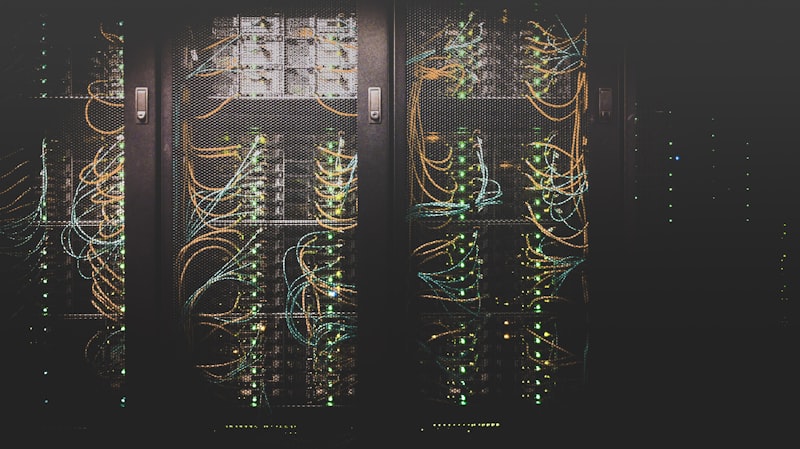
Vector databases — the storage layer behind most AI memory systems — encode information as high-dimensional numerical representations. When a query arrives, the system performs similarity searches across millions of stored vectors in milliseconds, retrieving the most semantically relevant content with perfect fidelity. Nothing degrades over time. Nothing is overwritten by a more recent emotional experience. The 1992 Amsterdam crash would be recalled identically in 2026 as the day it was stored.
AI systems also do not suffer from the misinformation effect. Feed an AI the correct facts, and those facts remain intact regardless of how the question is framed. Ask about the cars that "smashed" or the cars that "hit" — the underlying stored data does not shift.
This gives AI systems extraordinary advantages in domains that require precise, long-term recall: legal document review, medical record analysis, scientific literature synthesis. In these contexts, the unreliability of human memory is not a philosophical curiosity — it is a measurable source of error with real consequences.
What Humans Have That AI Does Not
But here is where the story gets more interesting than a simple comparison of specs.
Human memory is unreliable in part because it is weighted by emotion. The amygdala — the brain's threat-detection and emotional processing center — tags certain memories as high-priority. Emotionally significant events are encoded more deeply, rehearsed more often, and recalled with greater vividness. This is not a bug. It is an evolutionary feature that kept our ancestors alive: remember the berry that made you sick far better than the one that did not.
This emotional weighting enables something AI memory systems cannot replicate: associative creativity. Human memory connects seemingly unrelated experiences through felt similarity. A smell triggers a childhood memory that reframes a present problem. A conversation about loss suddenly illuminates a chapter in a book read years ago. These unexpected connections — what psychologists call remote associative thinking — are the substrate of creativity, insight, and wisdom.
AI systems can perform similarity search across vast corpora, but they lack the phenomenological experience that gives human associations their depth and surprise. They retrieve what is statistically related, not what is personally resonant.
There is also a counterintuitive case for strategic forgetting. The neuroscientist Blake Richards at McGill University has argued that active forgetting — the brain's mechanism for pruning irrelevant memories — is not a failure of the memory system but one of its most important features. A memory system that retained everything equally would be overwhelmed by noise. Forgetting is the brain's way of generalizing: keeping the essence of experience while discarding the details that would prevent flexible thinking.
Jorge Luis Borges explored this in fiction with his story of Funes the Memorious — a man who, after an accident, could forget nothing. He remembered every leaf on every tree, every cloud formation, every moment of every day with perfect precision. Borges describes him as nearly incapable of thought: genuine thinking, Borges suggests through the story, requires forgetting differences, generalizing, abstracting — operations that become impossible when every detail is equally present. Funes could not sleep. He could not make sense of his life. Perfect memory was a kind of paralysis.
AI systems with perfect recall face an analogous challenge: without the equivalent of forgetting, they can retrieve everything but contextualize nothing. The meaning of a memory — why it matters, what it connects to, what it implies about the future — requires the kind of selective, emotionally-weighted processing that human neurology performs continuously and invisibly.

How to Train a Memory That Serves You
Understanding the mechanics of human memory is not an exercise in pessimism. It is a practical starting point for improvement. The science points to several interventions with strong empirical support:
- Spaced repetition: Review new material at expanding intervals — after 1 day, 3 days, 1 week, 2 weeks, 1 month. This aligns review with the forgetting curve and converts short-term traces into long-term structure.
- Active recall over passive review: Testing yourself on material — even unsuccessfully — strengthens the memory trace more than re-reading. This is called the testing effect, and it is one of the most robust findings in educational psychology.
- Elaborative encoding: Connecting new information to things you already know creates more retrieval pathways. Explaining a concept to someone else, or asking "why does this matter?" dramatically improves retention.
- Sleep before and after learning: The hippocampus consolidates new memories during slow-wave sleep. Studying before sleep — not before a meeting or a commute — measurably improves next-day retention.
- Reduce cognitive load during encoding: Divided attention during learning (multitasking, notifications) dramatically impairs memory formation. Single-tasking during study is not a preference — it is a neurological requirement for effective encoding.
Beyond these study habits, targeted cognitive training offers measurable gains in specific memory domains. The Memory Test and Working Memory Test on AIHumanBench provide baseline assessments of your recall capacity and working memory span — the foundational systems that support all higher cognition. The Digit Memory Test specifically targets short-term numeric retention, which correlates with mathematical reasoning and fluid intelligence. Tracking these scores over time gives you a concrete signal of whether your interventions are working.
The Human in the Age of Perfect Machine Memory
There is a philosophical dimension to this that goes beyond cognitive hygiene. We live in an era when every conversation, transaction, and location can be stored permanently and recalled perfectly by systems that never sleep. The case for improving human memory might seem perverse when perfect memory is increasingly outsourceable.
But the Amsterdam witnesses who "remembered" footage that never existed were not failing. They were doing what human minds do: constructing meaning from incomplete information, filling gaps with reasonable inference, building a story that made the world coherent. That constructive capacity — imperfect, suggestible, emotionally colored — is inseparable from our ability to imagine futures that have not yet happened, to empathize with experiences we have not had, to create things that have never existed.
AI remembers everything. It forgets nothing. And in that perfect recall, it remains bound to what has already been. Human memory, with all its failures and distortions, is the price we pay — and the mechanism by which — we remain capable of genuine novelty.
Forgetting is not a malfunction. It is what makes us human.