AI vs. Human Cognition in 2026: Where Machines Win, Where We Still Lead
The Score Is Not What You Think
In July 2025, Google DeepMind's Gemini Deep Think model sat down — metaphorically — to attempt the International Mathematical Olympiad. It answered all six problems in natural language within the 4.5-hour time limit and scored 35 points: a gold medal equivalent. A year earlier, the same benchmark had yielded a silver. Human gold medalists typically score between 35 and 42 points.
That headline tends to get read as a verdict: AI has beaten us. Case closed.
But the Stanford 2026 AI Index, published in April of this year, tells a more complicated story. The same systems dominating the IMO read analog clocks correctly only 50.1% of the time. The report calls this a "jagged frontier" — and it's the most honest summary of where things actually stand.
Here is a domain-by-domain breakdown, using verified benchmark data, of where AI now leads humans, where humans still hold an edge, and what any of this means for the cognitive skills you train on platforms like AIHumanBench.

Where AI Has Clearly Surpassed Human Performance
Mathematics
The IMO gold is just one data point. On AIME 2025 — the American high school math competition that selects candidates for the US Olympic team — GPT-5.2 (released December 11, 2025) achieved a perfect 100% score. The median human competitor answers roughly 4–6 of the 15 problems. AI is not competing at the median level anymore; it operates near the ceiling of human expert performance on structured mathematical tasks.
GPT-5.2 also scored 40.3% on FrontierMath, a benchmark built from unpublished research-level problems that even professional mathematicians find extremely difficult. That number looks modest in isolation, but it represents a leap from near-zero just two years ago.
Coding and Software Engineering
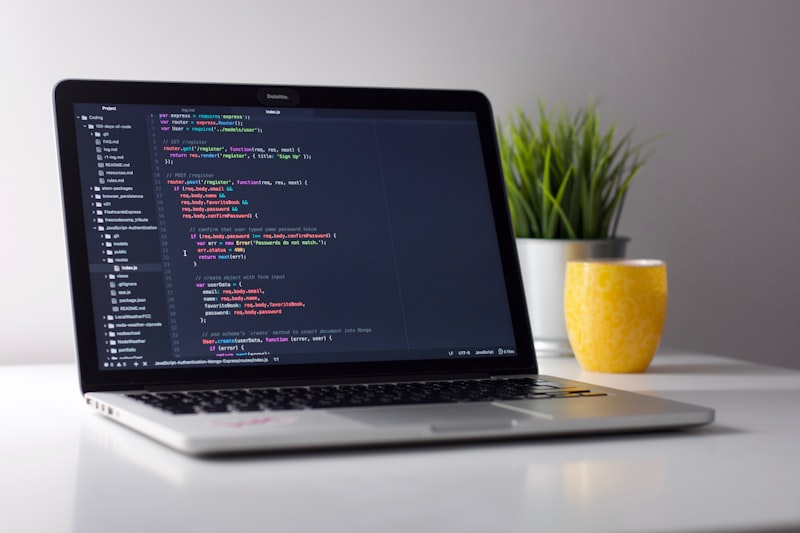
On SWE-bench Verified — which asks models to resolve actual open GitHub issues in real codebases — performance rose from roughly 60% to near 100% over the course of 2025 alone, according to the Stanford 2026 AI Index. GPT-4o agents resolved 67% of real GitHub issues in timed conditions, compared to 22% for human developers working under the same constraints.
The caveat matters: in short, well-defined tasks with a two-hour budget, top AI scores approximately four times higher than human experts. But at 32-hour horizons — tasks requiring sustained judgment, adaptation, and creativity — humans outperform AI by a 2-to-1 margin. AI's coding advantage is concentrated in speed and precision on bounded problems, not in open-ended engineering judgment.
Working Memory
A 2024 study (arXiv: 2410.07391) benchmarked frontier language models against human normative data on standard working memory tasks. The result: most top models perform at or above the 99.5th percentile of the human population. On the kind of digit-span and n-back tasks you'll find on AIHumanBench's working memory test, AI has effectively saturated the upper end of the human performance distribution.
This doesn't mean AI "thinks" the way humans do — it means the specific computational tasks that working memory tests were designed to measure are ones AI handles with ease. The architecture is different; the score is not.
Reading Comprehension and Language Understanding
AI surpassed average human performance on GLUE and SuperGLUE (standardized English language benchmarks) as early as 2019–2021. In 2026, the gap at the average-human level is so large it has stopped being a meaningful comparison. The frontier has moved to harder targets: doctoral-level scientific reasoning, novel in-context learning, and tasks requiring genuine understanding rather than pattern matching.
Where Humans Still Lead
Multimodal Real-World Reasoning
On MMMU — a benchmark testing multimodal understanding across college-level disciplines using real images, charts, and diagrams — OpenAI's o1 scored 78.2% against a human baseline of approximately 83%. This is the one major standardized domain where AI has not yet caught up, and it points to a broader pattern: AI struggles when the task requires integrating physical common sense with abstract reasoning.
The analog clock example from the Stanford report is illustrative. A 50.1% accuracy rate on reading analog clocks — a task any eight-year-old handles automatically — reveals that AI's impressive benchmark scores can coexist with surprising gaps in embodied, real-world perception.
Long-Horizon Complex Tasks
The RE-Bench data already cited above tells this story clearly: at 32-hour task horizons, human experts outperform AI 2-to-1. The longer and more open-ended the task, the more human advantages in sustained judgment, contextual adaptation, and creative problem-framing come into play.
This finding has direct implications for how AI tools are most productively used. They excel as accelerators for bounded sub-tasks, not as autonomous replacements for human judgment over extended, uncertain projects.
Genuine Creativity and Novel Reasoning
ARC-AGI — a benchmark specifically designed to resist memorization and test true novel reasoning — has been a persistent challenge for AI. GPT-5.2 was reported to be among the first models to exceed 90% on ARC-AGI-1. GPT-5.5, released April 23, 2026, hit 85% on the harder ARC-AGI-2. These are remarkable numbers, but the benchmark was designed to approximate the kind of fluid, transfer-capable reasoning that defines human general intelligence. The fact that frontier models are only now approaching it — on a carefully controlled test, not in unconstrained real-world problem-solving — remains significant.
A January 2026 study involving over 100,000 participants found that while AI systems outperform average humans on divergent association tasks, the top 10% of human creative thinkers still produce richer, more surprising outputs in open-ended creative work — poetry, narrative, cross-domain idea generation.
Social and Emotional Intelligence
No frontier model has demonstrated reliable theory of mind, nuanced reading of interpersonal dynamics, or genuine emotional responsiveness in unstructured real-world contexts. AI performs well on standardized emotion-recognition benchmarks but poorly when the task requires integrating emotional cues with social context in novel situations — exactly the kind of task AIHumanBench's Emotion Recognition test probes.
What This Means for the Tests You Take
The benchmarks above are useful for understanding the broad landscape, but they're not the same as the cognitive skills you exercise on AIHumanBench. Let's be precise about what the data does and doesn't say about each test category.
Reaction Time: AI inference is architecturally faster than human neural processing — milliseconds vs. 200–250ms average human response time. But AI "reaction time" depends entirely on hardware and network latency. In controlled software tests, AI wins. In tests of human athletic or perceptual response — where the sensor-to-motor pathway matters — the comparison is meaningless. Your reaction time score reflects something real about your nervous system that no benchmark can replicate.
Working Memory: AI tests at the 99.5th+ human percentile on standard tasks. But working memory in the human sense is a limited-capacity system that interacts dynamically with attention, emotion, and long-term memory. Your working memory score on AIHumanBench reflects a genuine cognitive capacity that matters for learning, reasoning under pressure, and daily performance — independent of what AI can or cannot do.
Pattern Recognition and Abstract Reasoning: These are areas where AI is strong and getting stronger. But the AIHumanBench tests in this category are calibrated against human population norms, which means your score tells you where you stand relative to other humans — a comparison that remains entirely meaningful regardless of AI performance.
Creativity and Verbal Fluency: Human advantage. The research is clear that top-decile human creative performance remains ahead of AI on open-ended tasks. These are skills worth developing.
The Honest Summary
AI has achieved gold-medal mathematics, near-perfect coding on bounded tasks, and working memory performance that saturates the human scale. It has done so faster than almost anyone predicted five years ago.
It also reads analog clocks correctly half the time and loses to human experts on tasks that extend beyond a few hours.
The Stanford 2026 AI Index's "jagged frontier" framing is right. This is not a story of uniform AI superiority or of human exceptionalism holding firm across the board. It is a story of capabilities that are genuinely, specifically uneven — and that unevenness is precisely why understanding your own cognitive profile still matters.
Knowing where you are strong, where you have room to grow, and how your performance compares to population norms is valuable information. That is what cognitive testing gives you — and it will remain valuable regardless of what any AI benchmark says next quarter.